Showing posts with label Reaganism. Show all posts
Showing posts with label Reaganism. Show all posts
Wednesday, January 16, 2013
Steve Gill's Legacy
* Although Steve Gill hosted a talk-radio show for about 15 years and was a leader of the anti-Tennessee-income-tax protest early in that tenure, I first heard his voice about four years ago, after Obama's election victory. I was shocked that someone could despise our new president so viciously before any new policy had been enacted. As I recall, he characterized Obama as vile and despicable or vile and contemptible. That pretty well snuffed my inaugural buzz, my dream of national reconciliation.
* Since then, I've tuned in to Gill's radio show two or three times per month, because he awakened my curiosity about the role of tribalism (hate, contempt, self-righteousness, etc) in a society. Clearly there is an appetite for it. Is there a need for it? Unconstrained it can lead to retribution or genocide.
* Gill lays all economic ills at Obama's feet, though they antedated Obama's administration. For example, Reagan's tax and spending programs increased government debt 300%; Obama's will increase it about 80%. Reagan granted amnesty to all undocumented aliens; Obama is contemplating comprehensive immigration reform. Gill occasionally used dialect to belittle black people, providing succor for white supremacists.
* Gill is brilliant at recalling names and events for his narratives, which are laced with sarcasm, irony and exaggeration to the point of dishonesty. I don't understand why someone as talented, intelligent and fortunate as Steve Gill would grovel in gratuitous hate. He has spent the last 1/4 of his life persuading successful people to resent unsuccessful people. Is that a legacy to be proud of?


Wednesday, September 19, 2012
Reaganistic dynamics not confirmed
* In a Sept 7 Tennessean Letter to the Editor, Donnie Allen claimed that the economic success under Clinton was due to a cut in the capital-gains tax rate (Reaganomics), specifically that Clinton's economic improvement started in 1995, the year when the capital-gains tax was reduced from 29% to 15%. These data are wrong, as can be seen comparing a plot of unemployment-rate history with a table of capital-gains-tax history.
.jpg)
* In fact, employment began a steady improvement in 1992, when the capital-gains tax had been 29% for five years and would remain so until being reduced to 21% in 1997. The economic improvement was largely due to a tech boom that continued until 2001, when it deteriorated rapidly as the .com bubble popped and Al Qaeda attacked us.
* There were three earlier periods of substantial economic improvement in the past half century. The first began about 1960, in the middle of a two-decade period of 25% capital-gains tax. Space-race spending may have contributed. Another improvement began in 1975, five years into a nine-year period of 35% capital-gains tax. This may have been due to a real-estate bubble that popped after 1980. Another improvement began in 1983, two years after the tax rate was lowered from 29% to 20%. This timing is consistent with Reaganistic theory; but the improvement was almost certainly due to steep reductions of interest rates after the economy had been spring-loaded by years of above-15% interest rates. Falling oil prices helped.
* The data fail to support Reaganistic theory because our economic health hasn't been capital-limited for the past half century. Reagan's tax cuts served only to enrich the already rich, thereby growing the hedge-fund industry.
Monday, April 23, 2012
Reaganistic economist deceives
* During the Mar 9 episode of NPR's "Need to Know", Dan Mitchell of the Cato Institute claimed that Reagan's tax cuts for the rich resulted in a 5x increase of tax revenues from people earning over $200k between 1980 and 1988 (see Reagan tax cuts ). This is a version of the effect predicted by Arthur Laffer, oft cited by Tennessean columnist Richard J Grant of the Beacon Center of Tennessee (see Laffer Curve ).
* The claim seemed paradoxical, since I knew that Reagan's tax cuts resulted in a 20% fall of revenue/GDP and GDP growth slowed under Reagan, owing to slower inflation incident to falling oil prices as OPEC lost discipline (see Reagan's legacy ).
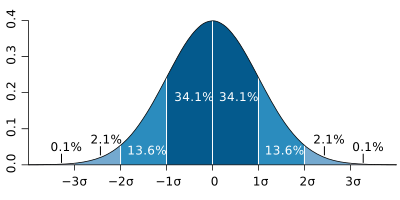
* In fact, there was a 5x increase in revenue from returns reporting more than $200k due to inflation, not tax cuts. The number of returns reporting more than $200k increased 6x because of the 40% inflation between 1980 and 1988 together with the bell shape of the income distribution curve (concave up at the high end). In 1980, only 0.12% of returns reported incomes exceeding $200k, this being 3 standard deviations above the mean (see Standard deviation diagram ). The 40% inflation then spread the distribution rightward so that $200k fell about 2.2 standard deviations above the mean, with about 1.4% of returns expected to report income above $200k. Said another way, in 1980 there was a pool of incomes just below $200k that was more than 10 times the total above $200k. Inflation pushed about 1/2 of that pool above $200k.

* Thus, contrary to claims of the Reaganistic economists, the increased revenue from returns reporting more than $200k income was due to inflation, not due to tax cuts. Had Mitchell carried out a similar analysis on the years from 1972 to 1980, with $100k as the cutoff point, he would have seen a more amazing increase of revenues from incomes above $100k, since the CPI doubled between 1972 and 1980.
* We could learn much about the matter at hand if income-distribution curves were available for the beginning and end of every presidency beginning back in the 1950s.
* The claim seemed paradoxical, since I knew that Reagan's tax cuts resulted in a 20% fall of revenue/GDP and GDP growth slowed under Reagan, owing to slower inflation incident to falling oil prices as OPEC lost discipline (see Reagan's legacy ).
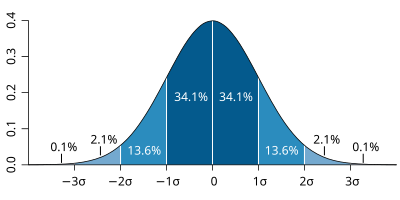
* In fact, there was a 5x increase in revenue from returns reporting more than $200k due to inflation, not tax cuts. The number of returns reporting more than $200k increased 6x because of the 40% inflation between 1980 and 1988 together with the bell shape of the income distribution curve (concave up at the high end). In 1980, only 0.12% of returns reported incomes exceeding $200k, this being 3 standard deviations above the mean (see Standard deviation diagram ). The 40% inflation then spread the distribution rightward so that $200k fell about 2.2 standard deviations above the mean, with about 1.4% of returns expected to report income above $200k. Said another way, in 1980 there was a pool of incomes just below $200k that was more than 10 times the total above $200k. Inflation pushed about 1/2 of that pool above $200k.

* Thus, contrary to claims of the Reaganistic economists, the increased revenue from returns reporting more than $200k income was due to inflation, not due to tax cuts. Had Mitchell carried out a similar analysis on the years from 1972 to 1980, with $100k as the cutoff point, he would have seen a more amazing increase of revenues from incomes above $100k, since the CPI doubled between 1972 and 1980.
* We could learn much about the matter at hand if income-distribution curves were available for the beginning and end of every presidency beginning back in the 1950s.
Monday, November 24, 2008
If Carter had won
> From time to time, I wonder how America and the world would have evolved had Jimmy Carter won a second term. The Reagan revolution wouldn't have occurred, and Bush Sr might have had two unrevolutionary terms followed by a couple of Clinton terms.
> Policies and programs to address world overpopulation and reproductive health wouldn't have been interrupted by a gag rule. More manufacturing and middle-class jobs would still be in the US. More of our citizens would have assets, savings and comfortable retirements. Less wealth would be concentrated in a plutocracy and gambled in hedge funds, collateralized debt obligations and credit default swaps. More banks would be solvent.
> Most of our electricity would be from solar and wind energy, and more of our transportation would be electrically powered. Energy efficiency/conservation would be advanced. Our trade imbalance would be much smaller, so less of the US would be foreign owned. Our government debt would be far less than the 13 trillion that now makes us vulnerable to mistakes or blackmail by foreign governments or sovereign wealth funds.
> In summary, our policies would reflect common sense rather than Reaganomic myths and slogans.
> Policies and programs to address world overpopulation and reproductive health wouldn't have been interrupted by a gag rule. More manufacturing and middle-class jobs would still be in the US. More of our citizens would have assets, savings and comfortable retirements. Less wealth would be concentrated in a plutocracy and gambled in hedge funds, collateralized debt obligations and credit default swaps. More banks would be solvent.
> Most of our electricity would be from solar and wind energy, and more of our transportation would be electrically powered. Energy efficiency/conservation would be advanced. Our trade imbalance would be much smaller, so less of the US would be foreign owned. Our government debt would be far less than the 13 trillion that now makes us vulnerable to mistakes or blackmail by foreign governments or sovereign wealth funds.
> In summary, our policies would reflect common sense rather than Reaganomic myths and slogans.
Sunday, January 14, 2007
Reaganism
Since the '50s, I have believed that our reproductive success would inevitably make the earth an inhospitable place, characterized by famines, diseases and wars. Since the '60s, I have worried about future energy availability and the fact that populations were already too dense to cope with the inevitable shortfall. Nixon took notice and advanced some energy-conserving proposals. In the '70s, inflation was rampant through the Ford and Carter administrations, and this was augmented by OPEC's embargo that resulted in severe gas shortages and price hikes. Carter began preparing us for some austerity, but he was hampered by the hostage crisis in Iran.
Then along came Reagan. During the 1980 campaign, I objected to his "are you better off?" line, considering the internal complexity and external causes of our problems. It seemed simple minded or dishonest for Reagan to claim that he could cut taxes, increase spending and balance the budget. In fact, these measures quadrupled the national debt in just a few years. It also seemed that deregulation and globalization would bankrupt many US businesses, decimate our manufacturing sector and expand our trade deficit. It angered me to hear him say that the American worker could compete with any in the world, if the government were off their backs. The result was a massive transfer of satisfaction from middle- and working-class families to the very rich. It angered me that he interfered with international family-planning services. His belief that the market place would solve all problems seemed extremely short sighted, as it would accelerate the unsustainable over-exploitation of resources. Regardez the SUV.
Reagan's policies succeeded in controlling inflation, which bankrupted many real-estate partnerships (to my detriment) but stimulated stock-market gambling (to my benefit). For me it was a wash.
After 26 years, Reaganism is so pervasive as to seem like the natural order. One result is that the US is behind other developed nations in resource-conserving technologies. Another is that overpopulation is bringing misery to many areas of the world. Still another is trillions in debt to other nations. It's time to re-examine Reagan doctrines.
Subscribe to:
Posts (Atom)